
5.4 inHg Vacuum in the Cylinder During the EXAUST STROKE ?!?!?!
- SailorBob
-
 Topic Author
- Offline
- Elite Member
-

Just a little history and context first.
Bogs down and shakes when loads are put on the engine at idle. For example, turning on electrical loads, AC or putting it in gear with the brake on all cause this. Do them all at once and the car feels like it'll shake itself apart.
The car has good fuel control with normal fuel trims ( LTFT slightly negative at around -7% last time I checked ). No evidence of air leaks.
There are no DTCs currently, although I once saw a VSS code once.
Repair history ( things I've done ):
Idle air screw opened to increase low air flow and slightly improve idle quality.
both engine mounts and 2 / 3 tranny mounts.
Timing and water pump. I have photographic evidence that the cam sprocket marks line up and timing is about 2-5* BTDC at idle.
Fuel pump, injectors, fuel filter.
Coil, wires, plugs.
IAC replaced
EGR cleaned and checked
Intake cleaned
TSS sensor
MAF snap throttle waveforms look normal as do TPS waveforms. Knock sensor operating normally. Cam and crank signals look good.
So now to the main point. I got to run some more tests on this car, and took some intake manifold and in cylinder pressure waveforms. The reading were taken at 930 meters above sea level.
Average intake vacuum: 17.9 inHg. This is the same reading I got with a mechanical gauge. Spec is minimum 18 inHg at sea level I assume.
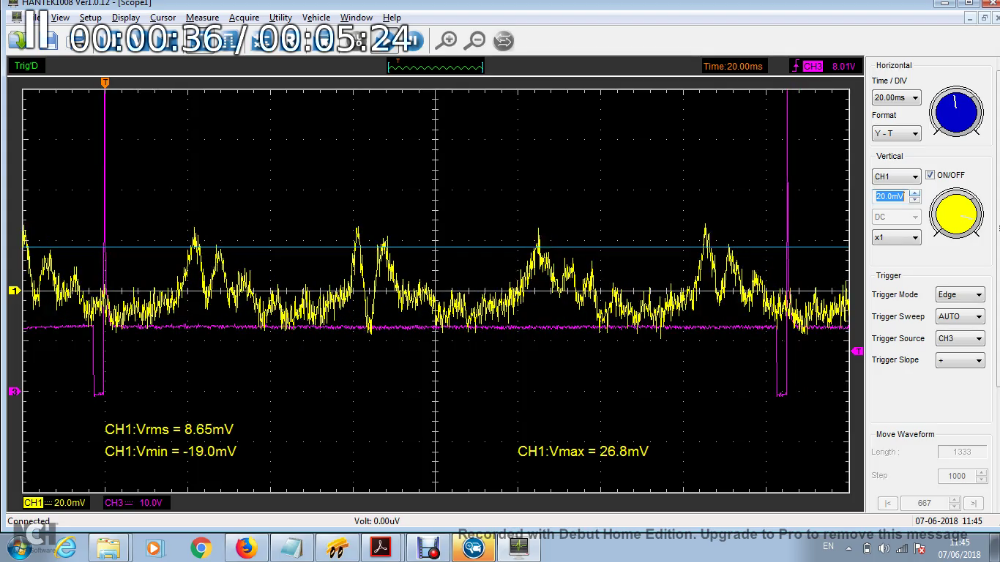
Mechanical compression readings on all the cylinders were about 197 psi dry, 210 wet, after multiple cranks, with throttle held open.
On the scope, cranking with throttle closed, I'm seeing about 123 psi peaks consistently, and max vacuum of 19.85 inHg.
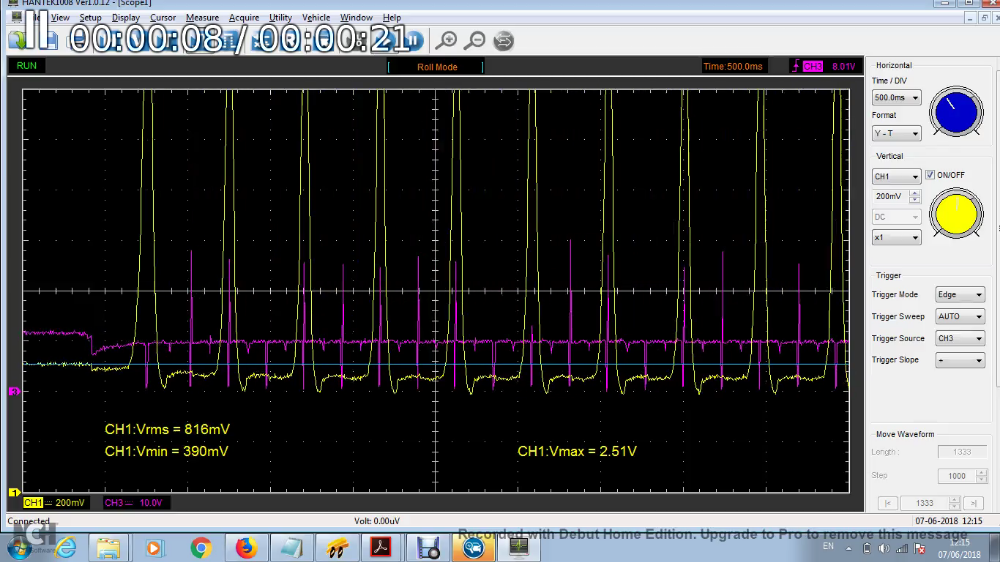
The first thing I noticed that looked strange was that I'm seeing quite a bit of vacuum in the cylinder during the exhaust stroke. Also, the vacuum in the cylinder when cranking is higher than in the manifold when running. I'll get back to this. Waveform attached at bottom.
Running is were things get really weird.
Running compression is about 44.4 psi, and max vacuum is a whopping 26.26 inHg. What is super strange is that I'm seeing about 5.4 inHg vacuum in the cylinder during the exhaust stroke!
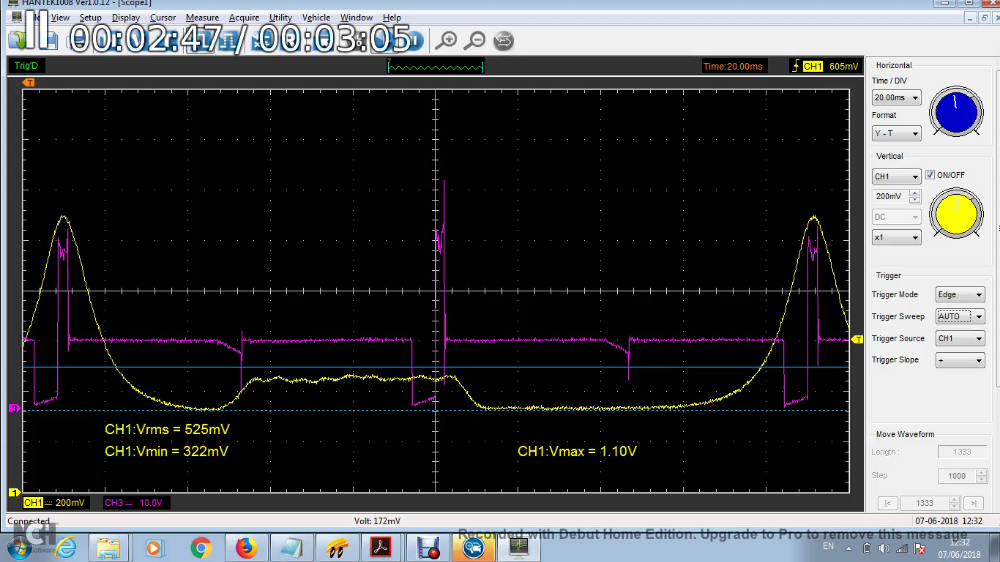
I triple checked my readings, and saw the same thing on two non-adjacent, non-companion cylinders.
Unfortunately I didn't put up 720 cursors and check measure cam events, and it'll be about two weeks before I can get my hands back on this car.
The solid blue lines in the in cylinder captures represent 0 psi.
Please Log in or Create an account to join the conversation.
- Andy.MacFadyen
-

- Offline
- Moderator
-

- Posts: 3357
- Thank you received: 1037
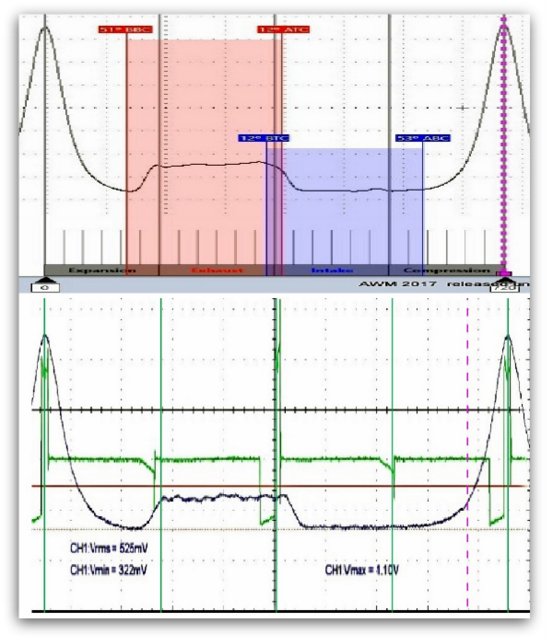
Known good typical 1.8 litre 4 cylinder 16 valve engine on top your with capture pasted on bottom. Look around 360 degree mark, valve timing looks about 1 or even 2 teeth late.
" We're trying to plug a hole in the universe, what are you doing ?. "
(Walter Bishop Fringe TV show)
Please Log in or Create an account to join the conversation.
- SailorBob
-
Topic Author
- Offline
- Elite Member
-
Andy.MacFadyen wrote: Cursors at TDC end of exhaust - start of induction reveal a lot
Known good typical 1.8 litre 4 cylinder 16 valve engine on top your with capture pasted on bottom. Look around 360 degree mark, valve timing looks about 1 or even 2 teeth late.
First, how did you overlay the cursors? Second, this car has always had this problem, and I replaced the WP and tbelt myself. You can see here that the timing marks line up perfectly:
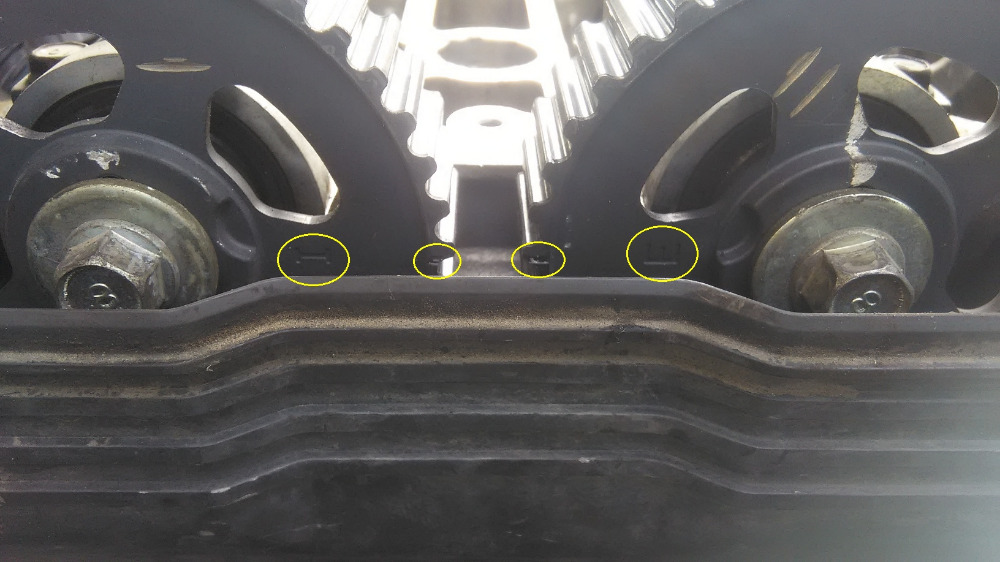
There's an I and a E pointing towards each other, and you can see the timing notches lined up straight across from each other, each circled in yellow.
Also, the cam and crank signals line up correctly, or at least the same as an example I found on iatn.
So, I think whatever the explanation it's something more complicated than the timing belt being off a tooth or two. Just from poking around, I have a feeling this engine may have been out and apart at some point. So I'm wondering if something weird might have happened, like they used the wrong intake cam, or put the sprocket on the cam wrong. The sensor is on the exhaust cam, so the intake could be messed up some how, yet still have good cam / crank correlation.
I just can't think of any explanation that would allow me to have good compression, yet result in poor manifold vacuum, and excessively high vacuum during exhaust and intake strokes...
Please Log in or Create an account to join the conversation.
- Chad
-

- Offline
- Moderator
-
- I am not a parts changer.
- Posts: 2181
- Thank you received: 732
SailorBob wrote: I have a feeling this engine may have been out and apart at some point. So I'm wondering if something weird might have happened, like they used the wrong intake cam, or put the sprocket on the cam wrong. The sensor is on the exhaust cam, so the intake could be messed up some how, yet still have good cam / crank correlation.
I just can't think of any explanation that would allow me to have good compression, yet result in poor manifold vacuum, and excessively high vacuum during exhaust and intake strokes...
Is it possible the cams are reversed...Intake to exhaust, exhaust to intake. I found this thread that sounds similar to your problem.
mazda626.net/topic/39670-timing-issues-on-98-20l/
"Knowledge is a weapon. Arm yourself, well, before going to do battle."
"Understanding a question is half an answer."
I have learned more by being wrong, than I have by being right.

Please Log in or Create an account to join the conversation.
- SailorBob
-
Topic Author
- Offline
- Elite Member
-
Now that I read over it, I'm not sure if it's the same problem since he had really low cranking compression ( around 75psi ) and I've got around 195psi using a manual gauge cranking it over a few times. I'm getting about 123psi on the cranking waveform, which is still way higher.
Of course it's possible mine has different cams since it's a different year and European, and the effect of swapping them would be different possibly...
Please Log in or Create an account to join the conversation.
- JustJuan
-

- Offline
- New Member
-

- Posts: 15
- Thank you received: 6
edit: not zero psi, it would show current baro right?
Please Log in or Create an account to join the conversation.
- SailorBob
-
Topic Author
- Offline
- Elite Member
-
You can see at the beginning of the cranking capture that the blue line lines up with the baseline voltage reading from before cranking. I also did the test on two different cylinders with the same results.
I also compared with waveforms I took on another car recently, and I'm sure the readings are valid.
Please Log in or Create an account to join the conversation.
- SailorBob
-
Topic Author
- Offline
- Elite Member
-
EVO 34* BBDC Measured as soon as pressure starts rising
EVC 14.8* ATDC Measured as soon as pressure starts dropping
IVC 40* ABDC Measured as soon as pressure starts rising
I'm new at this, but those numbers seem reasonable, although without a spec I can't be certain.
Please Log in or Create an account to join the conversation.
- SailorBob
-
Topic Author
- Offline
- Elite Member
-
Did realize a single engine could have so many different cams:
mazda626.net/topic/14174-ffs-series-engine-and-cam-specs/
I also found some cam specs for two specific 626 engine, not directly relevant, but interesting:
www.mazdabg.com/ftp-uploads/Mazda/626/Ad...MAZDA62618i16VFP.pdf
1.8L FP Engine:
EVO 54* BBDC,
IVO 5* BTDC,
EVC 8* ATDC,
IVC 47* ABDC
www.mazdabg.com/ftp-uploads/Mazda/626/Ad...620ComprexDRF-CX.pdf
2.0L RF Engine:
EVO 60* BBDC,
IVO 13* BTDC,
EVC 8* ATDC,
IVC 15* ABDC
Pretty wide range of numbers....
Please Log in or Create an account to join the conversation.
- SailorBob
-
Topic Author
- Offline
- Elite Member
-
The waveform still looks a bit suspect to me, but further analysis will have to wait for a new transducer.
Please Log in or Create an account to join the conversation.
- RobertoLansky
-
- Offline
- New Member
-
- Posts: 6
- Thank you received: 5
Bogs down and shakes when loads are put on the engine at idle. For example, turning on electrical loads, AC or putting it in gear with the brake on all cause this. Do them all at once and the car feels like it'll shake itself apart
Is the engine RPM dropping when you're turning on these loads and will it go away if you give it more throttle opening?
Please Log in or Create an account to join the conversation.
- SailorBob
-
Topic Author
- Offline
- Elite Member
-
Please Log in or Create an account to join the conversation.